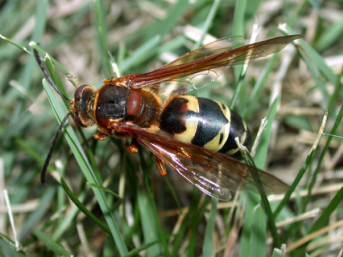
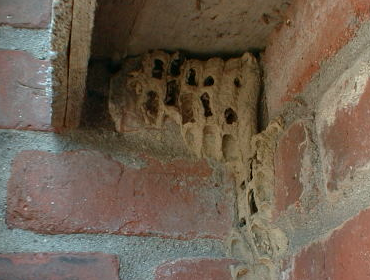
Perfectly round half-inch holes in your fascia boards. Sawdust on the deck below. A large bee hovering near the eaves every afternoon.
Call 800-750-9253That is a carpenter bee. And it is boring deeper into your home every day.
Yale Pest Control eliminates carpenter bee infestations across Connecticut with targeted gallery treatments and entry-point sealing. We have protected CT homes from wood-boring insects for 43 years.
Carpenter bee control is a pest management service that targets Xylocopa virginica, the eastern carpenter bee, which bores circular galleries into untreated wood using mandible vibration. Unlike termites, carpenter bees do not eat wood. They excavate nesting chambers that weaken fascia boards, deck rails, and structural timbers over successive seasons.
— Service DefinitionLeft untreated, carpenter bee galleries attract woodpeckers. Woodpecker secondary damage, where birds peck open galleries to reach larvae, causes far more visible destruction than the bees themselves.
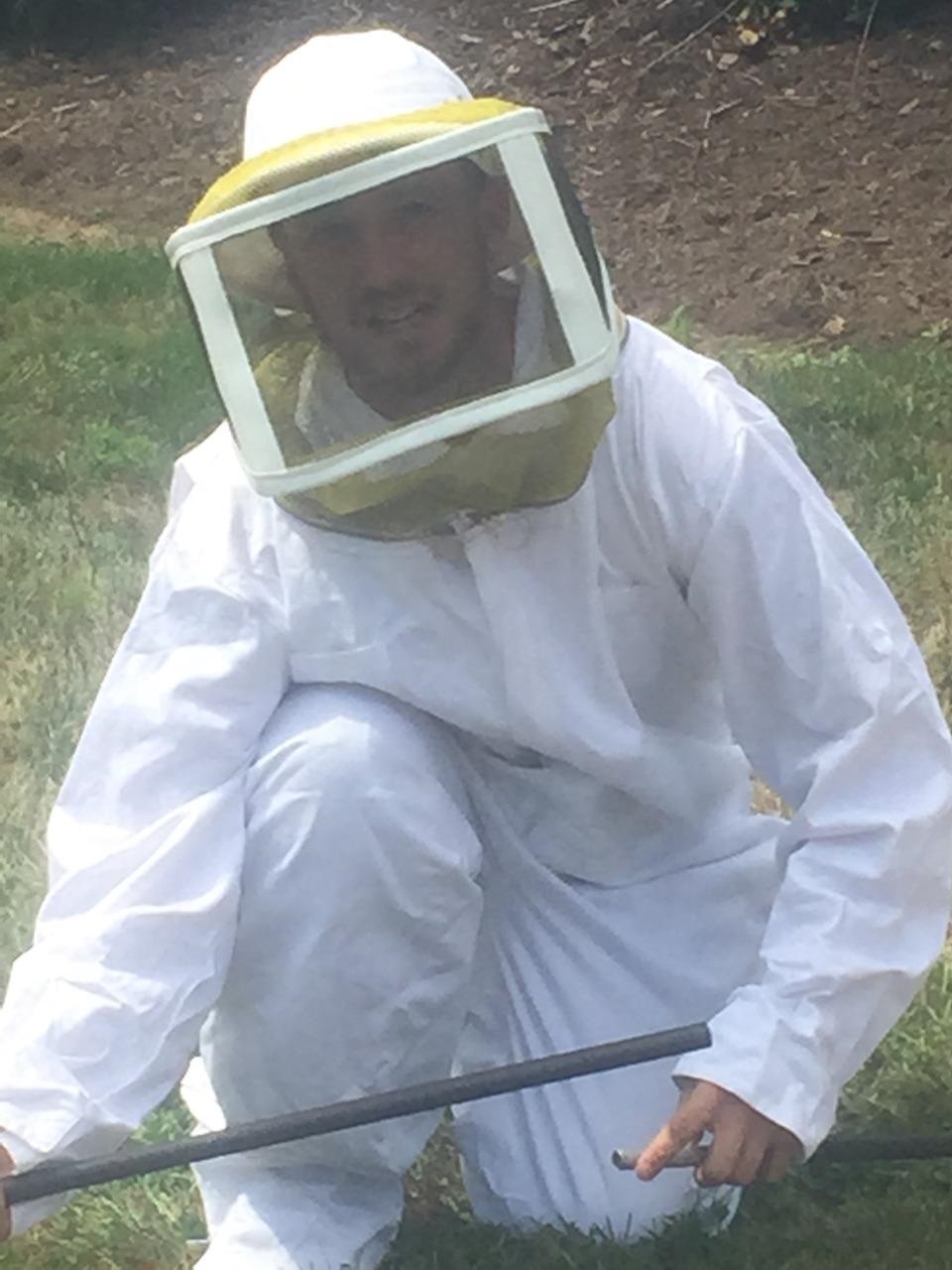
Yale Pest identifies active galleries, applies residual dust treatments directly into boring channels, and seals entry points to prevent reinfestation.
Your technician locates active galleries by identifying the characteristic half-inch entry holes and frass deposits beneath them. We inspect all exposed wood surfaces, focusing on fascia, soffits, deck rails, and pergolas.
Yale Pest applies residual insecticidal dust directly into each gallery. This treatment eliminates adult bees and larvae inside the boring channels. Direct application ensures the product reaches the nesting chamber.
After treatment, we seal gallery openings to prevent reuse by returning bees. Unsealed galleries attract new carpenter bees year after year.
We apply surface treatments to vulnerable wood to deter new boring activity. Painted and stained surfaces are far less attractive to carpenter bees than raw, untreated wood.
Carpenter bees return to the same galleries each spring, boring deeper each season. Yale Pest's gallery treatment and sealing breaks this cycle before cumulative damage requires wood replacement.
Woodpeckers target carpenter bee galleries to feed on larvae inside. This secondary damage often exceeds the original boring. Eliminating the bee colony removes the food source that attracts woodpeckers.
Yale Pest Control holds QualityPro certification from the NPMA, earned by fewer than 3% of pest companies nationwide. Our technicians distinguish carpenter bees from bumble bees on sight, preventing unnecessary treatment of beneficial pollinators.
Every carpenter bee treatment includes a written guarantee. If carpenter bees return, Yale Pest retreats at no additional cost.
Even if other exterminators haven't solved your carpenter bee problem, Yale Pest targets existing galleries directly rather than relying on perimeter sprays.
Yale Pest Control backs every carpenter bee treatment with a written guarantee. Retreatment is included at no charge until the problem is resolved. No contracts. No hidden fees. Just facts about what is going on, and a proven plan to fix it. Finally — a wood-boring insect specialist that treats the galleries, seals the holes, and guarantees the result.
Without — contracts, hidden fees, or rotating strangers.
Yale Pest Control — Since 1983
Male carpenter bees hover aggressively but cannot sting. Females can sting but rarely do. The real danger is structural: gallery boring weakens wood over time.
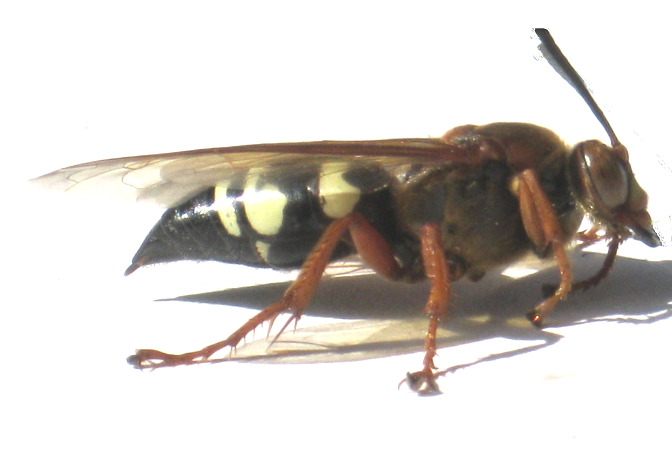
Carpenter bees have a smooth, shiny black abdomen. Bumble bees are fuzzy all over. Yale Pest identifies the species during inspection to avoid treating beneficial pollinators.
Carpenter bees emerge in spring, typically April through June. They bore galleries during this period. Fall treatment targets overwintering larvae before the next season begins.
Yale Pest applies residual dust treatment inside galleries before sealing. This eliminates bees and larvae within the boring channels before we close the entry points.